SEO 2026: Why traffic is melting away and how to get ChatGPT to cite your website
Author: Web-Man expert
You know, I constantly hear the same story from businesses now. Clients come, throw up their hands and say: “Traffic is falling, we seem to have positions in Google, but zero leads. We did not change anything, we did everything as before. What is going on?”
Sounds familiar?
I answer: a turning point is happening. And many have simply slept through it.
Before, a client went to Google, typed a query, clicked the first link and landed on a website. Everything was predictable. And now? Now they open ChatGPT or ask Alice: “Pick me a good gas boiler for a 150-square-meter house, economical and with smart control”.
And the neural network gives them right in the chat a comparison table, the pros and cons of the models, approximate prices. The person gets the answer and… does not even go to the website. Traffic has dissolved into thin air.
But let us go straight to the good news: SEO is not dead. It has just moved. Now you work not only for Google’s algorithms but also for ChatGPT, Perplexity, Yandex Alice and other neural networks. Your new task is to be not in the TOP 10 of search results but on the list of sources that AI trusts.
In this article I will explain in simple words, without complicated terms, how we at Web-Man rebuild promotion strategies for the new reality and return to clients the traffic that seemed to have gone forever.
Step 1. Accept the new reality: your client no longer googles
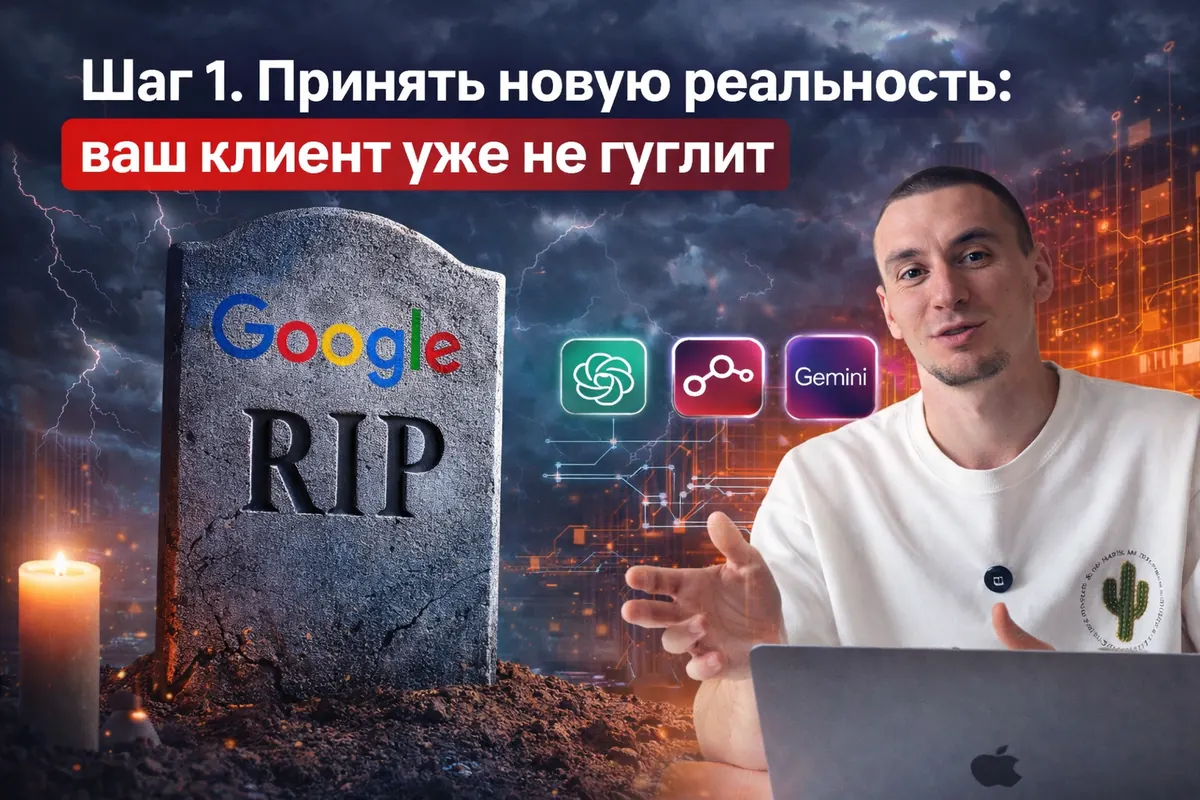
Google and Yandex have not gone anywhere, they are still giants. But now neural network assistants live inside them: Alice, Gemini, AI overviews. And they intercept queries halfway.
But that is not all. People search on YouTube, in ChatGPT itself, even on TikTok. Your client is now everywhere. And if you are not where they search, you simply do not exist in their field of view.
So the first and most important thing is to change the goal. No more racing for the “TOP 10”. Your new goal is citation. You need to make the neural network, when forming an answer, say: “Here is a study by company N, they know this subject.” And give a link to you.
Step 2. Learn to speak the language of dialogue
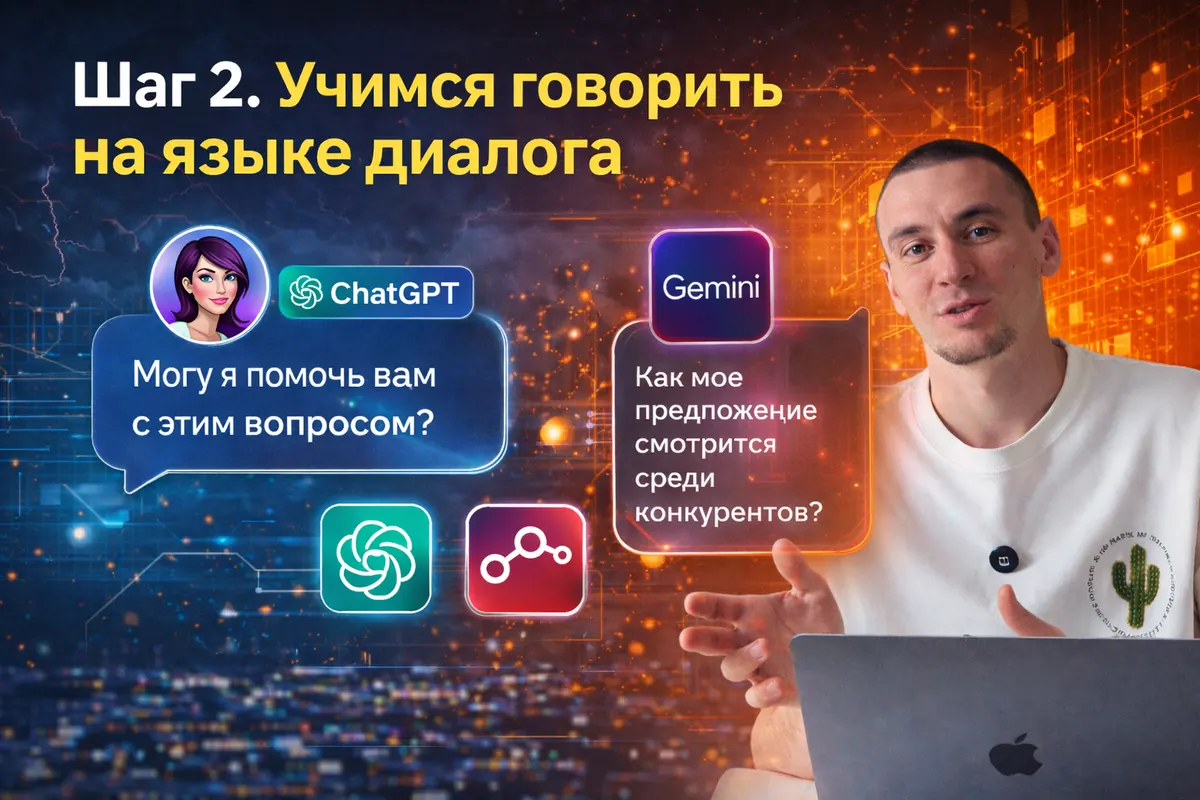
This is where most people stumble. They keep stuffing the website with keys like “buy a boiler Moscow”. And neural networks… well, it is not that they do not understand such queries — they ignore them. Because people phrase things differently.
A person in a chat does not write “boiler buy”. They write: “compare”, “pick for me”, “which is better”, “show options”. This is the language of dialogue, not the language of a catalog.
How to collect live queries? There are two working ways:
- Ask the neural networks themselves. Go to Perplexity.ai or DeepSeek and ask the main question on your topic. See what clarifying questions the bot asks you. What query options it suggests at the bottom of the chat. That is your new semantics. No parsers will give such accuracy.
- Dig into Google Search Console. Apply two filters: “query length more than 5 words” and “contains the words: show, compare, pick, how to choose, which is better”. Voilà — in front of you is not “boiler” but “which boiler is better to choose for a private house of 150 square meters and how much does installation cost”. That is not a keyword. That is a ready-made topic for content.
At Web-Man we now start any project with exactly this stage. Without “live” queries for AI, modern SEO simply does not launch.
Step 3. We capture the entire topic. The “information universe” strategy
Suppose you have found dozens of long, conversational queries. The old school: write an article for each — and you are made. The new reality: it does not work like that.
A neural network, like a person, trusts not the one who answered a question once, but the one who has proven expertise across the entire topic.
What does this look like in practice?
We choose a narrow niche. Not “boiler repair” but “Baxi boiler repair in Moscow”. And we start building an information universe around it.
Step 3.1. Create the main guide page.
Not just “we are great, order from us”. But specifics:
- What breakdowns happen most often
- How much diagnostics and repair cost
- Real cases with photos
- Reviews
- A video of the process
This is a page that closes 80% of the client’s questions. It also becomes your “core of expertise”.
Step 3.2. Surround the core with supporting materials.
Google will suggest subtopics. You type “Baxi boiler” — and see what else people search for:
- “does not ignite”
- “makes noise”
- “pressure drops”
- “error code E01”
For each such subtopic — a separate article or a short video. You do not just answer a question. You close the problem completely.
Step 3.3. Do not spread yourself thin.
The most common mistake is to jump to the next topic without squeezing the current one dry. They have not closed “Baxi boiler repair” yet, and are already writing about “washing machine repair”. As a result you do not become an expert anywhere.
The rule is simple: first become the main encyclopedia on one topic. Then move on to the next one.
Step 3.4. Go beyond the website.
Your website is the base. But neural networks trust not only websites. They trust YouTube, authoritative platforms, forums.
YouTube is your best friend. Why? Because neural networks read not the video but text transcripts. Shoot a video where you explain in simple terms why the boiler makes noise, and speak in it those very long, conversational keys. This is a direct path into AI results.
The same article can be repackaged for VC.ru, for an answer on a specialized forum, for a post in a topical community. Be where your clients are and where AI looks for answers.
Step 4. We build “credit of trust”. How to give the neural network a signal: this can be trusted

Imagine that AI is a careful, meticulous librarian. Thousands of websites are brought to it. How does it choose which to cite? It looks for signals of trust.
Signal No. 1. Links from authoritative sources.
Not just links, but links from websites that AI itself already trusts. How to find them?
Enter a commercial query on your topic in ChatGPT or Perplexity. When the neural network forms an answer, open the “Sources” section. Here they are — the golden links. Websites that AI already considers authoritative.
Your task is to get onto these platforms. A guest post, a mention, an interview, an expert comment. This is not just a link. This is a recommendation from the AI itself.
Signal No. 2. Review sites and maps.
For a local business this is 90% of success. Yandex Maps, 2GIS, Google Business Profile. Filled-in profiles, up-to-date photos, client reviews and — be sure to! — replies to reviews.
Algorithms read this as a signal: “This is a living, working company. This can be trusted.”
Signal No. 3. Presence in the information field.
Neural networks scan not only websites but also forums, media, social networks. Comment on articles in industry publications, answer questions on Pikabu and specialized forums, give expert comments.
The more quality mentions of your brand in different places on the web, the higher your “credit of trust” in the eyes of AI.
So what is the result? The new SEO formula
The point is not to learn fashionable terms like query fanout or RAG. The point is to honestly answer the question for yourself:
Are you still playing the game “click my link”? Or are you ready to move on to the game “cite me”?
In the first case you will watch traffic flow away to those who adapted faster. In the second you will start building a systematic strategy where content, links, reputation and expertise work toward one goal: to become the main authority for AI in your niche.
It is harder than just buying links or writing 30 articles for keys. Yes. But it is more honest. And most importantly, it works here and now, not “someday later”.
Stop losing traffic. Let us gather it back

At Web-Man we have been doing promotion for more than 20 years. And yes, we too went through this transition: from classic SEO to working with neural networks, from the race for positions to building digital authority.
Today we help businesses not just regain lost positions but establish themselves in the new search reality. So that when a client asks AI, the neural network answers: “The guys from this company understand this best of all.”
If you feel that the old methods have stopped working and time and budget are going into the void — come and discuss your project.
We will analyze your niche, see exactly where AI is taking your traffic, and build a strategy for the new reality.


